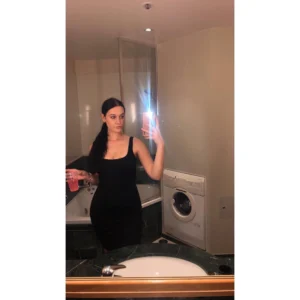
Aurora cat eye nails are what happens when magnetic polish stops imitating a single line of light and starts imitating the sky. Instead of one sharp band, you get shifting color, diffused glow, ribbons that move as your hands move — the northern lights, bottled. I've spent months with magnets in every position imaginable, and the difference between a flat cat eye and a true aurora is entirely technique.
This is a masterclass, not a basics lesson. Below: the toolkit that matters, the physics in plain language, and 15 techniques — each one a different way to move the magnet, layer the polish, or finish the surface to unlock a distinct aurora effect.
What "Aurora" Actually Means in Cat Eye
Standard cat eye pulls magnetic pigment into one tight band. Aurora work does the opposite: it keeps the pigment partially dispersed so light scatters across the nail in shifting zones. The key variables are magnet distance (closer = tighter band, farther = wider glow), magnet angle (which sets the ribbon's direction), dwell time (how long you hold it), and layering (multiple thin magnetic layers build depth a single coat can't).
You don't need rare polishes. Most aurora effects come from ordinary cat-eye gels plus how you handle the magnet. That said, multi-chrome and sheer magnetic shades give you more to work with than single-pigment ones.
The Toolkit That Matters
Beyond the standard cat-eye setup, aurora work rewards three extras: a circular (donut) magnet for halo effects (~$8), a thin bar magnet for precision lines, and sheer magnetic gels in 2–3 tones for layering. A matte top coat is also essential — several aurora finishes only reveal themselves under matte. Total add-on cost: under $20.
15 Aurora Techniques to Master
1. The Classic Northern Lights
The foundational aurora: a green-to-purple multi-chrome magnetic gel, magnet held 5–6 mm off (farther than standard) for 12 seconds so the band blooms wide, then cured. The color shifts as the nail moves — green head-on, violet at an angle. Dwell time is everything; under 10 seconds and it reads as ordinary cat eye. Salon: $70–80.
2. Velvet Aurora
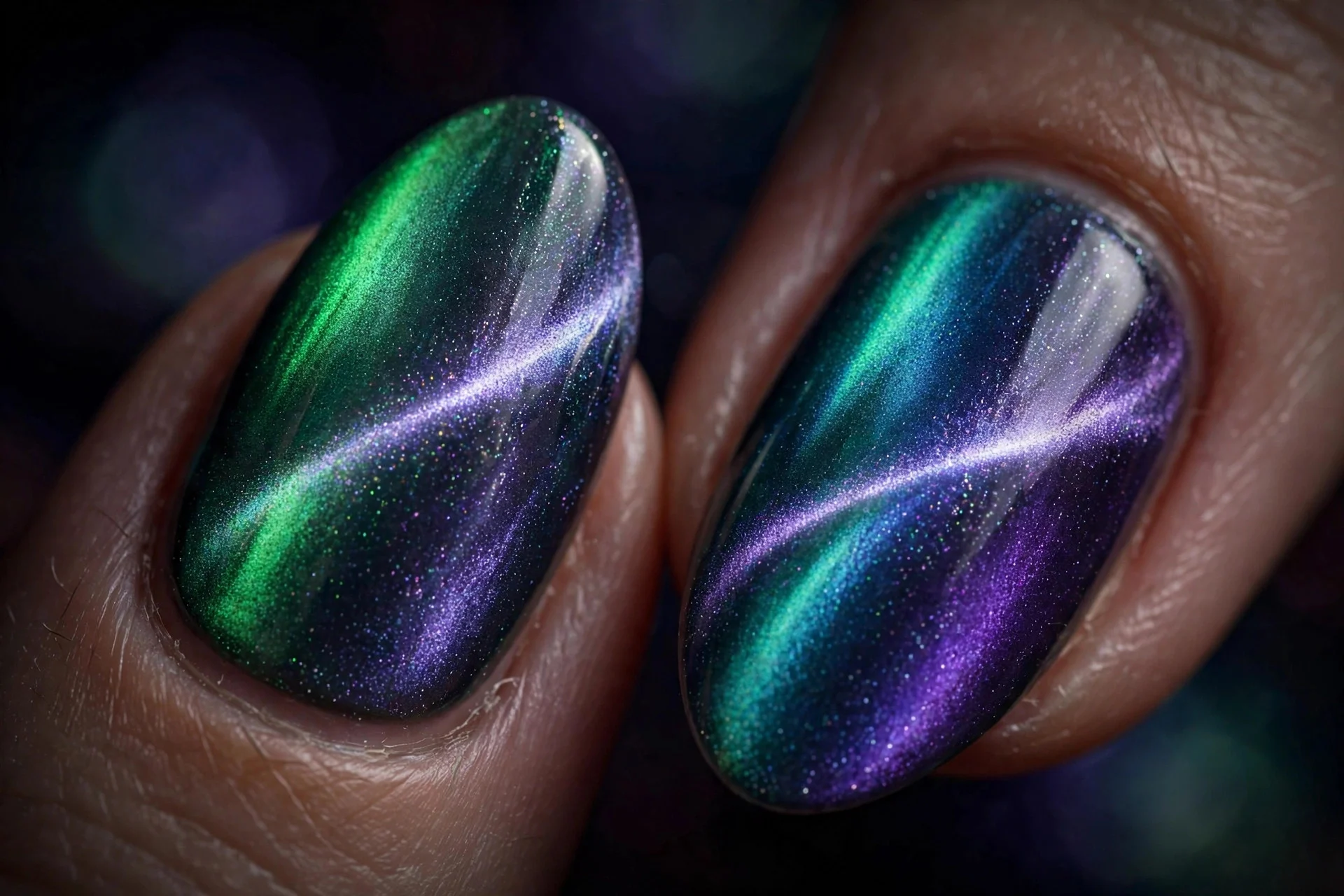
After magnetizing, seal with a matte top coat instead of glossy. The matte surface scatters the magnetic glow into something that looks like crushed velvet — soft, deep, touchable. It shows every flaw, so this technique demands your cleanest application. The payoff is the most tactile-looking finish in this list.
3. Glass Aurora
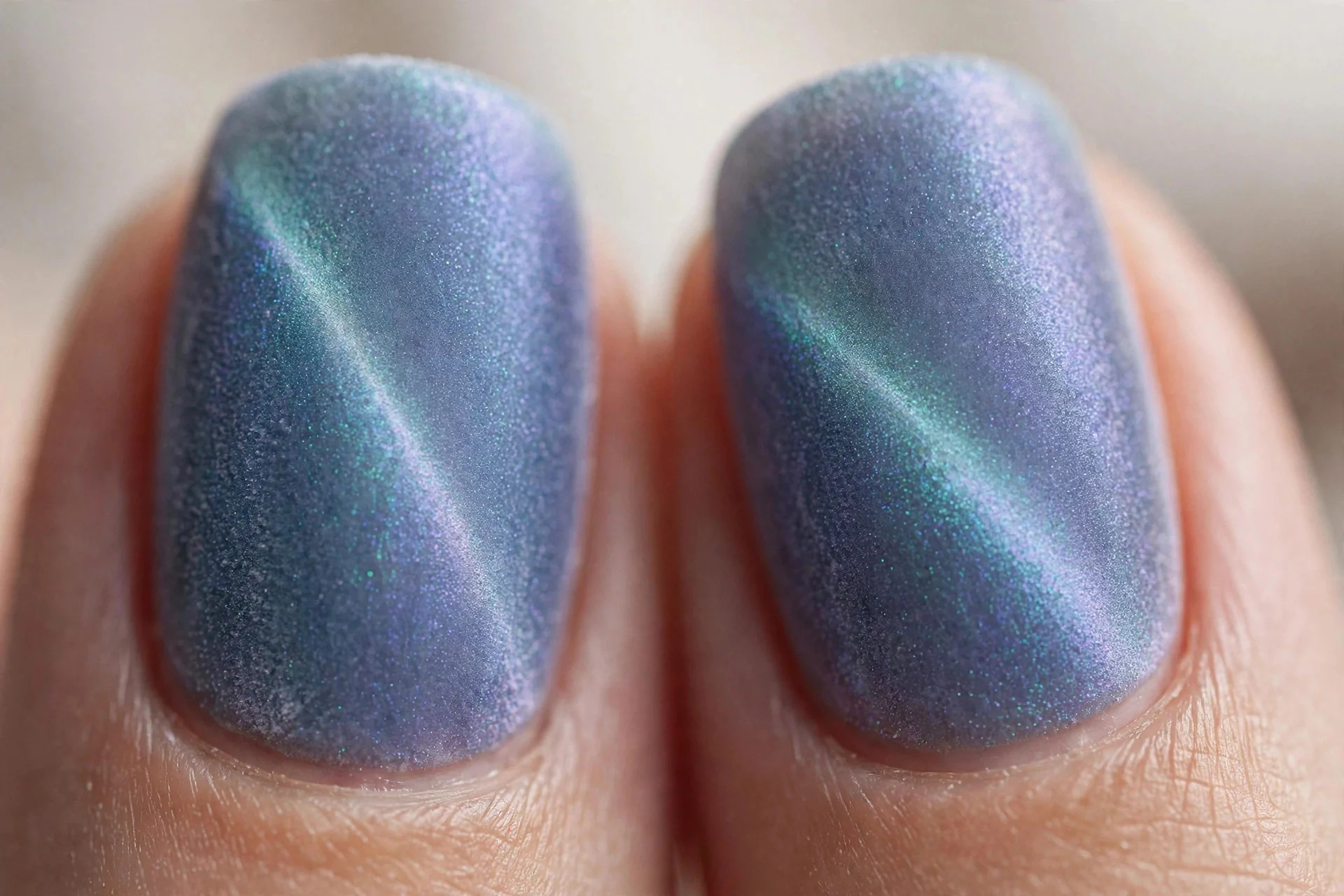
The opposite: the glossiest top coat you own, applied in two layers. Under high gloss, the aurora zones look submerged — like the sky seen through ice. Use a pale magnetic shade (silver-lilac works beautifully) so the glass effect reads clearly. This is the most light-reactive technique here; it changes dramatically between indoor and outdoor light.
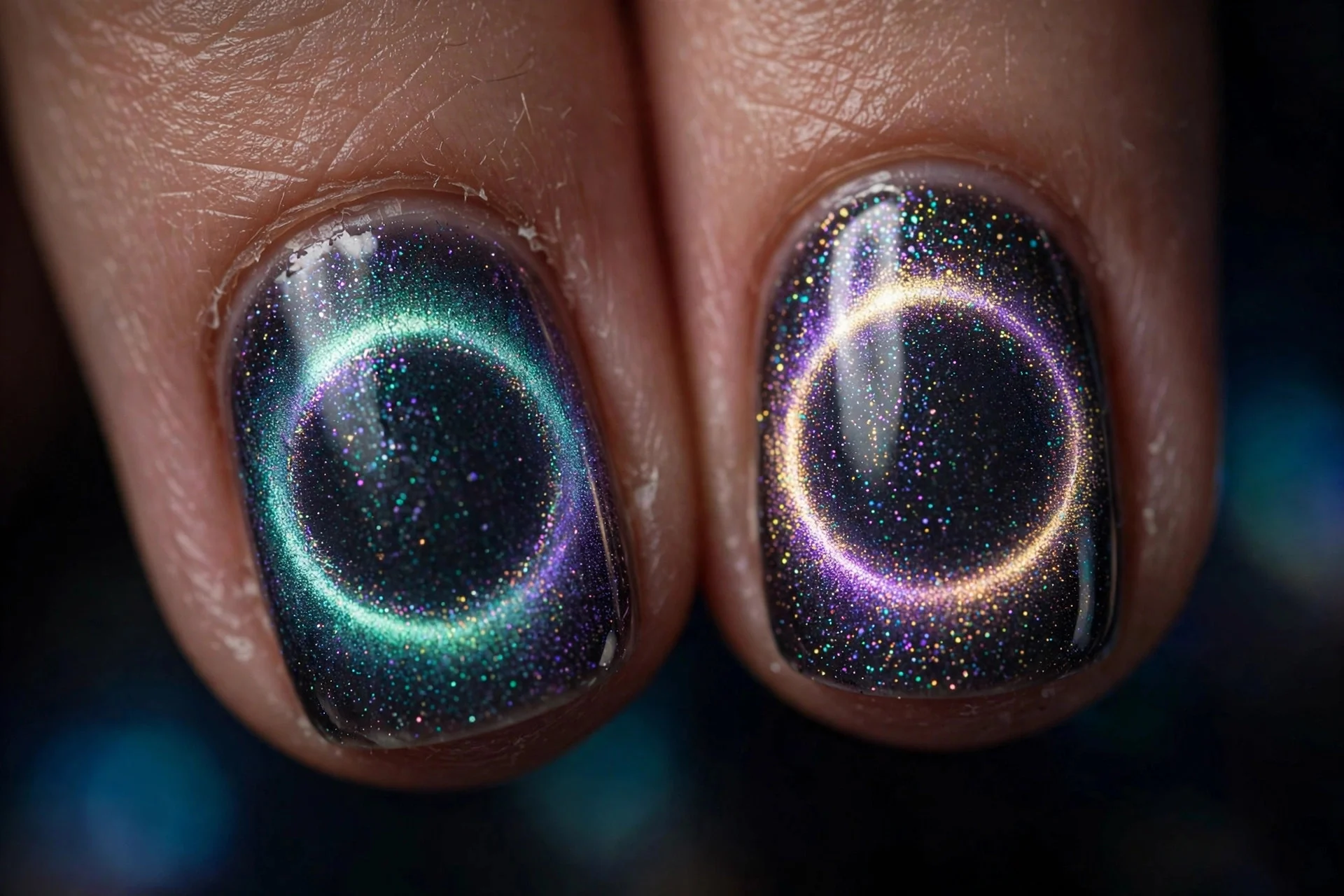
4. The Halo Ring
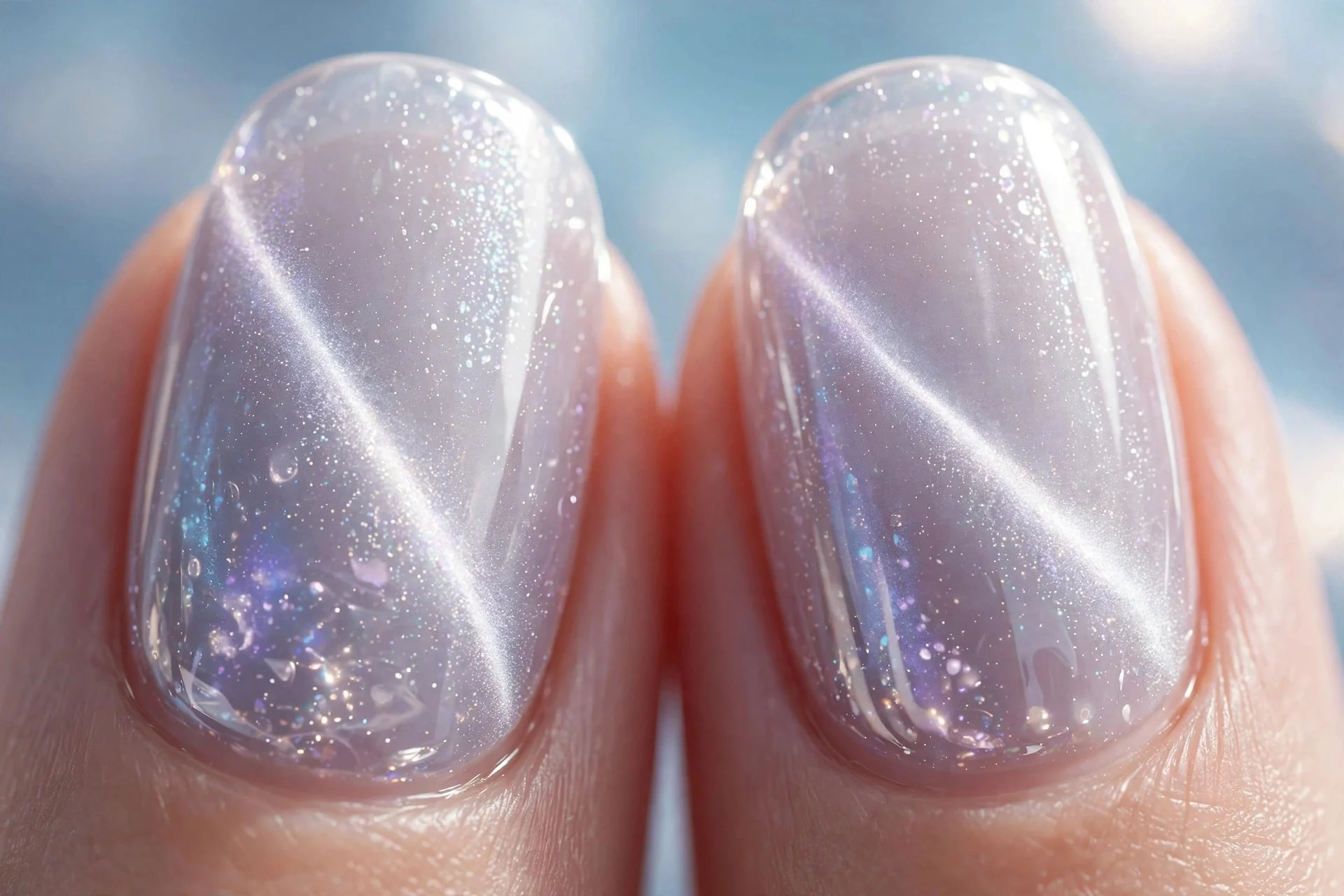
Hold a circular donut magnet centered 3 mm above the nail for 10 seconds. The pigment pulls into a glowing ring with a darker center — an eclipse on your fingertip. It works best on wider nail beds where the ring has room to form; on narrow nails the ring collapses into a dot. Stiletto and coffin shapes show it off best.
5. Dual-Magnet S-Curve
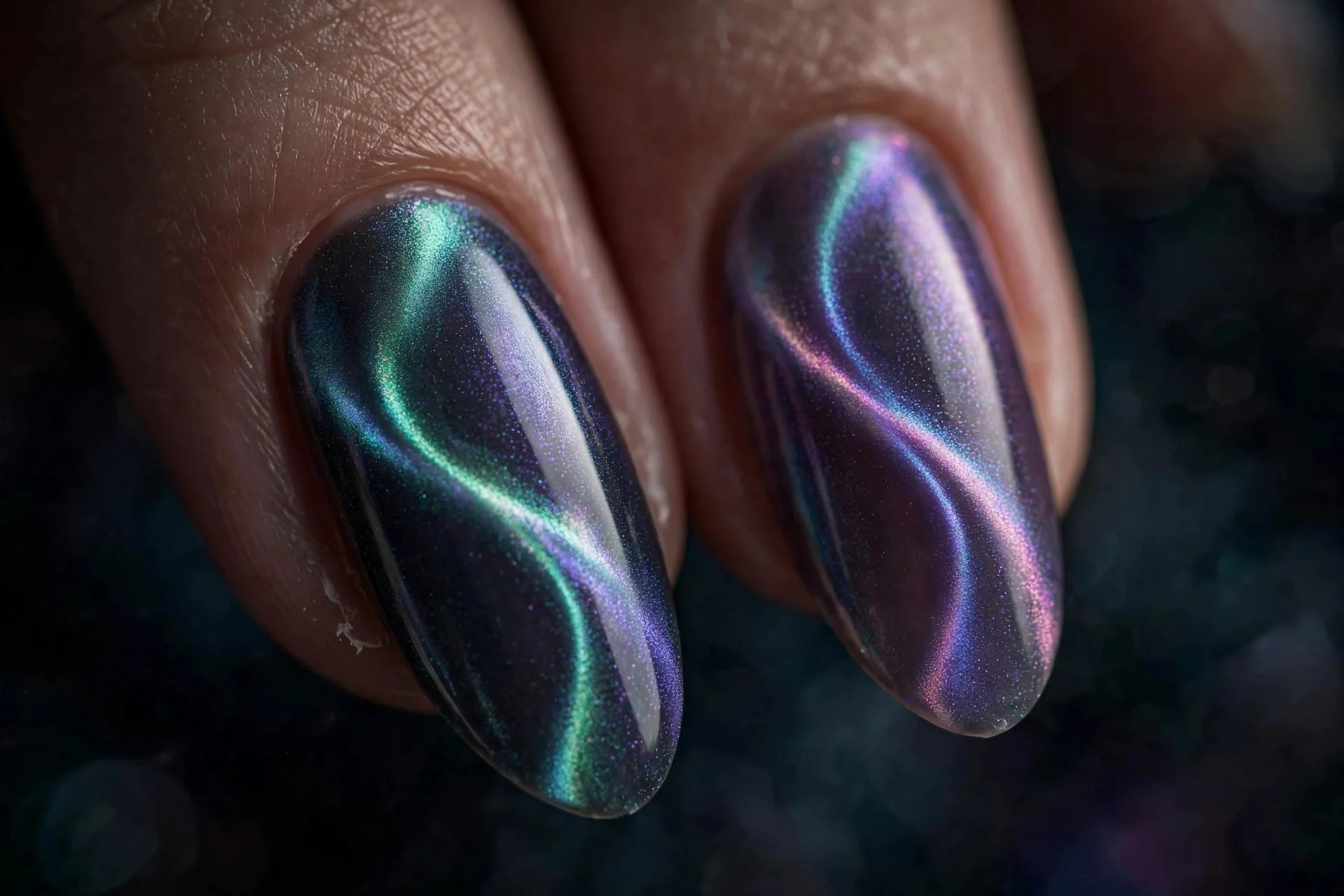
Hold a bar magnet at the cuticle angled left while a second magnet (or the opposite end) angles right at the tip, 8 seconds. The pigment follows both pulls into an S-shaped ribbon. It takes practice — the two fields fight if your angles are sloppy — but the result looks hand-painted in a way single-magnet work never does. Salon: $80–90 for the fiddliness.
6. Diagonal Slash
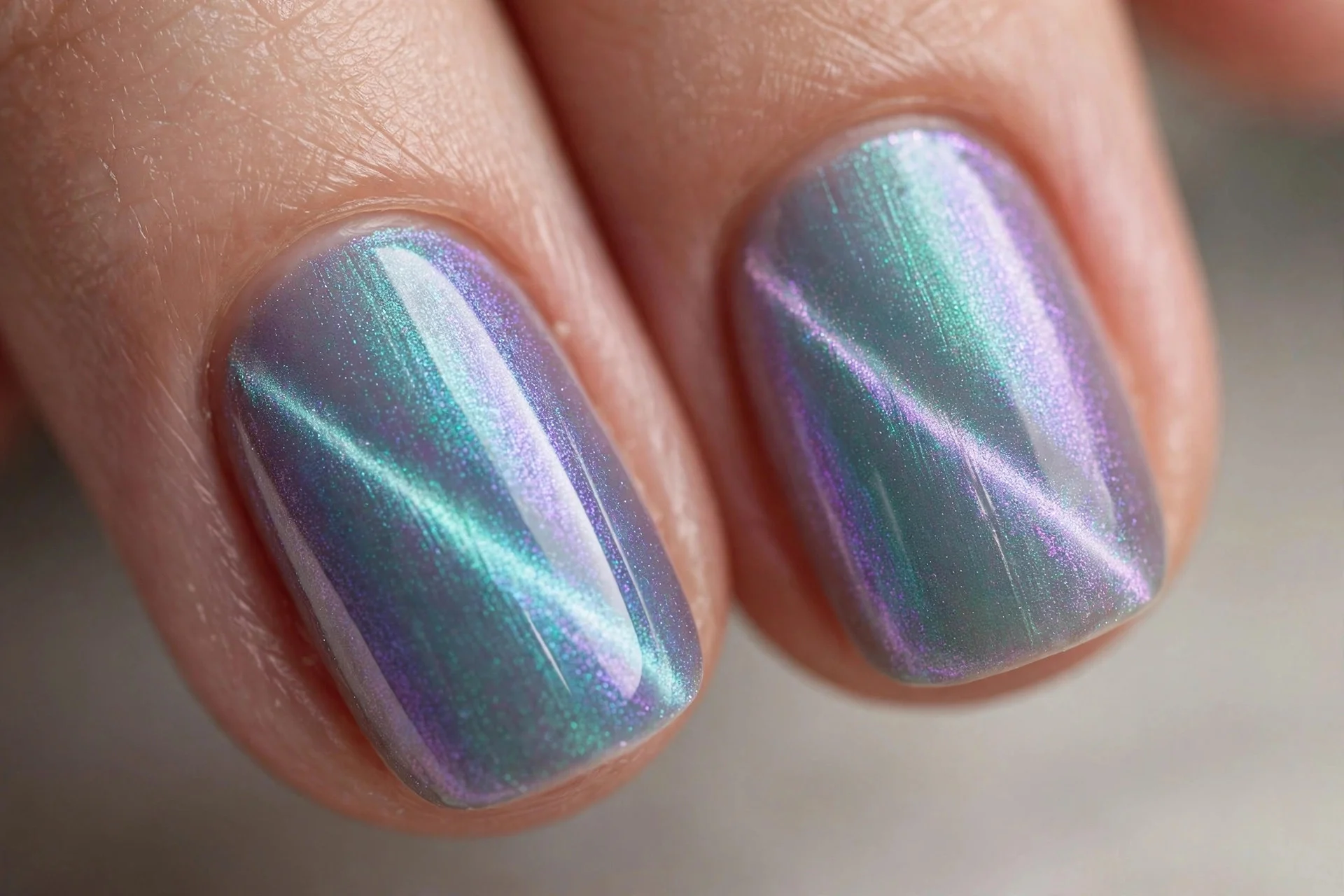
One motion: sweep the bar magnet diagonally across the nail, 2 mm above the surface, in a single smooth pass lasting about 3 seconds, then cure immediately. The speed keeps the band soft-edged rather than sharp. It's the fastest aurora technique here and the most forgiving — uneven sweeps just look like different skies.
7. Double Band
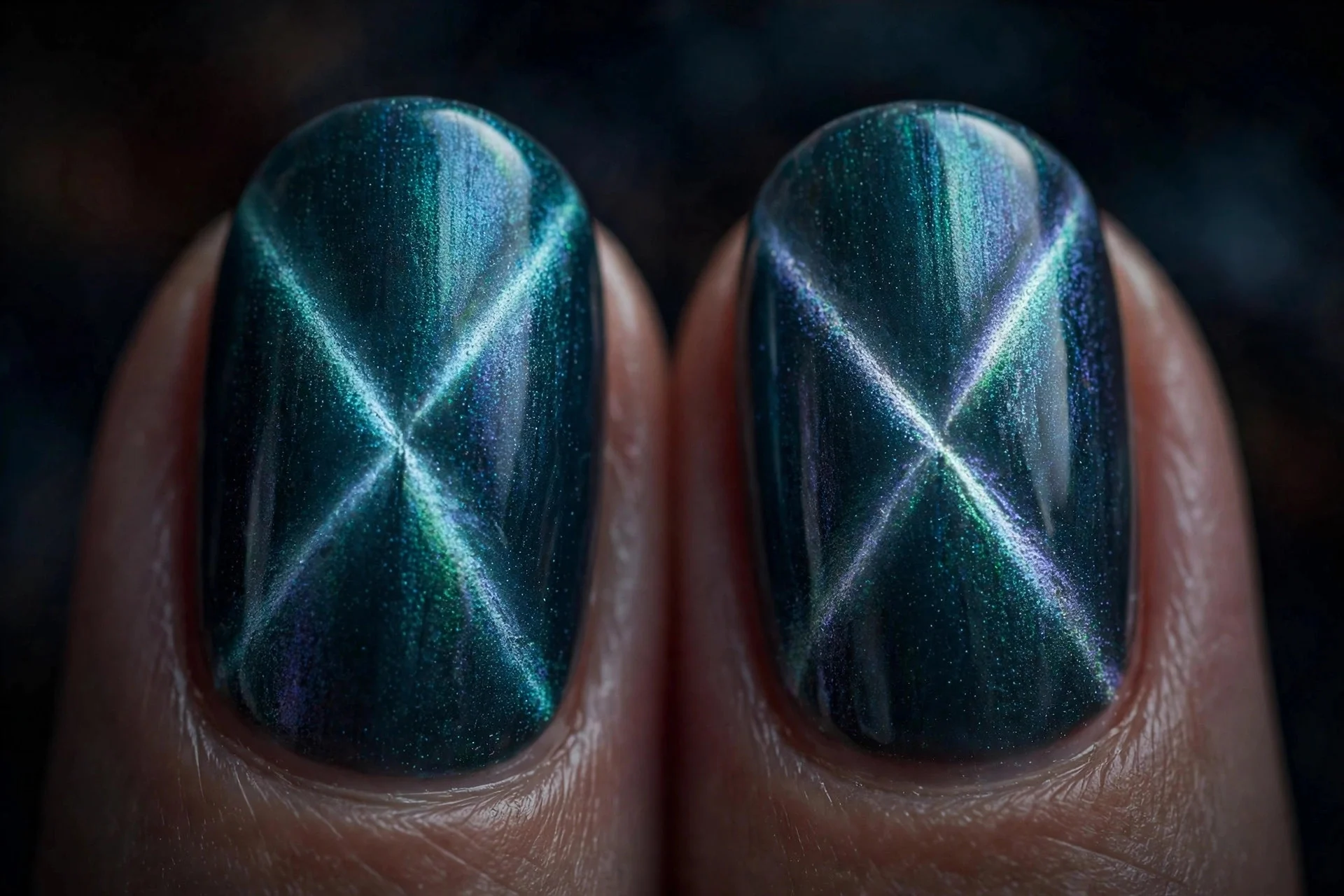
Magnetize once lengthwise and cure, then apply a second thin magnetic coat and magnetize widthwise before curing. The two cured bands cross, creating a four-quadrant aurora with a bright intersection. The layering gives genuine depth — you can see one band sitting under the other. My favorite technique for photographs.
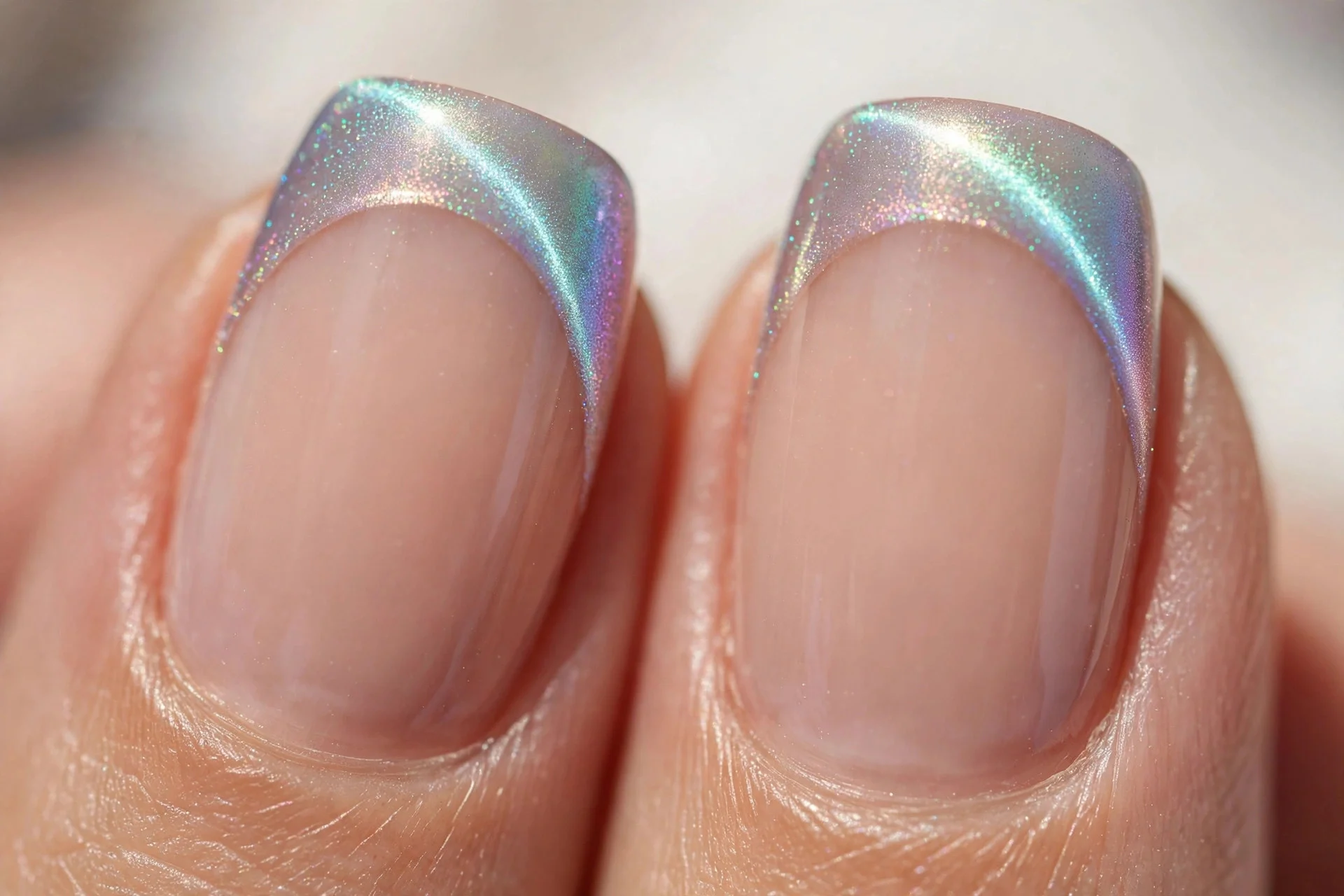
8. Aurora French Tips
Paint the nail sheer nude and cure. Then apply magnetic gel only to the tips and aurora-magnetize each tip (hold the magnet 4 mm off, 10 seconds). The tips glow while the base stays quiet — a French manicure for people who find French manicures boring. Keep the smile line thin; thick aurora tips overwhelm the design.
9. Ombré Aurora Fade
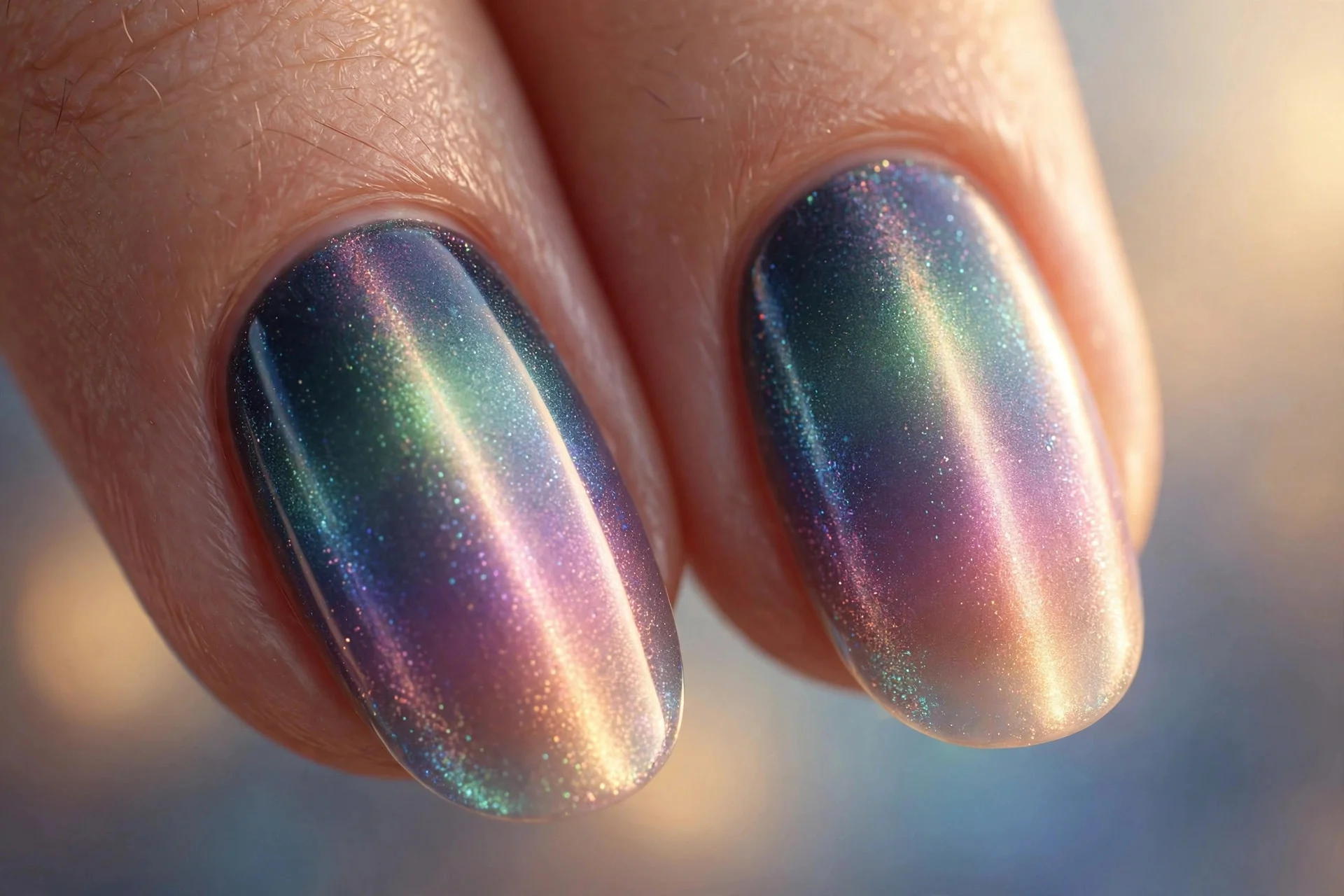
Sponge-blend two magnetic shades (dark at cuticle, light at tip), then hold the magnet 6 mm off for a wide diffused pull before curing. The aurora zones melt into the gradient — it looks like dawn breaking. The chrome-like powders in my pink nail ideas layering guide behave similarly under magnets. Salon: $85–100.
10. Layered Aurora Depth
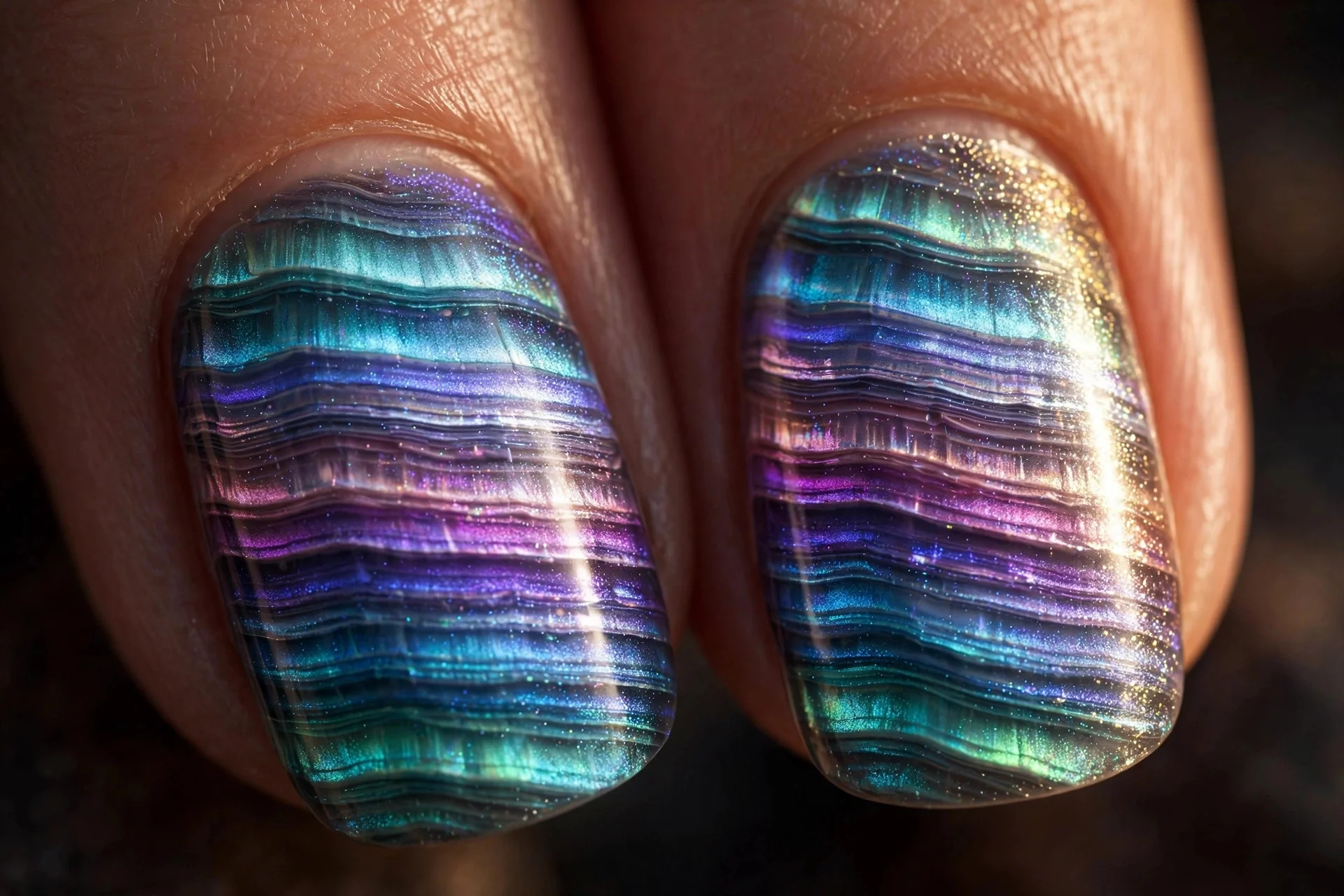
Three whisper-thin magnetic coats, each magnetized differently (vertical, diagonal, wide bloom) and cured between layers. The finished nail has visible strata — light moves through the layers like sediment. It's the most time-consuming technique here (three full cure cycles per nail) and the most dimensional. Worth it for special occasions.
11. Aurora Over Dark Base
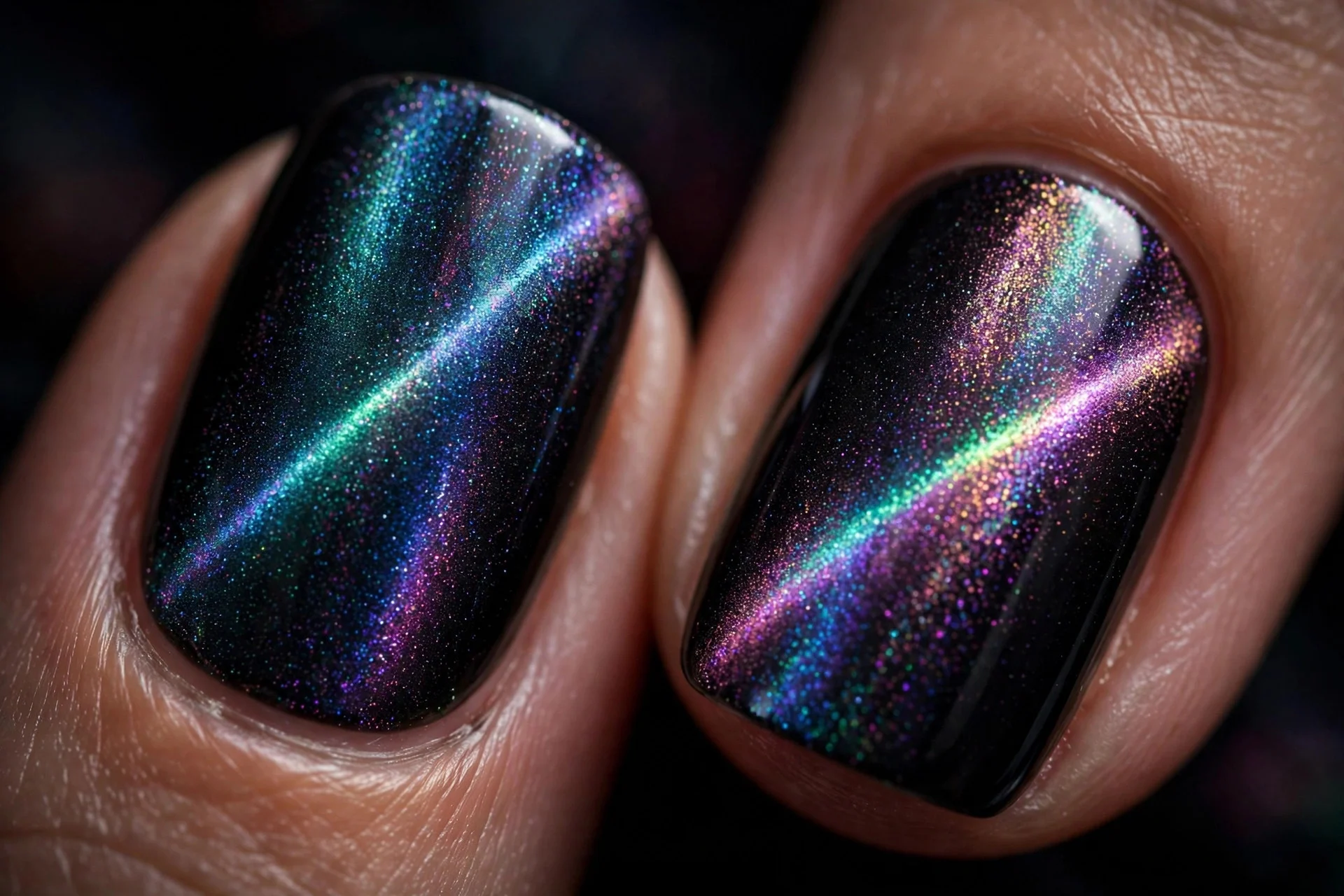
Cure an opaque black or deep plum base first, then apply one sheer magnetic coat over it and aurora-pull. The dark underlayer makes the aurora zones ignite — maximum contrast, like stars against night. This is how you get aurora to read in evening light, where pale auroras wash out. Deep shades like these star in my brown nail ideas collection too.
12. Aurora Over Sheer Nude
The daytime version: sheer nude base, one sheer magnetic coat, wide-bloom pull. The aurora is subtle — a whisper of movement rather than a statement. It's the technique I'd teach a beginner, and the one I'd wear to the office. On deeper skin, choose a caramel-tinted sheer base so the nude doesn't go ashy.
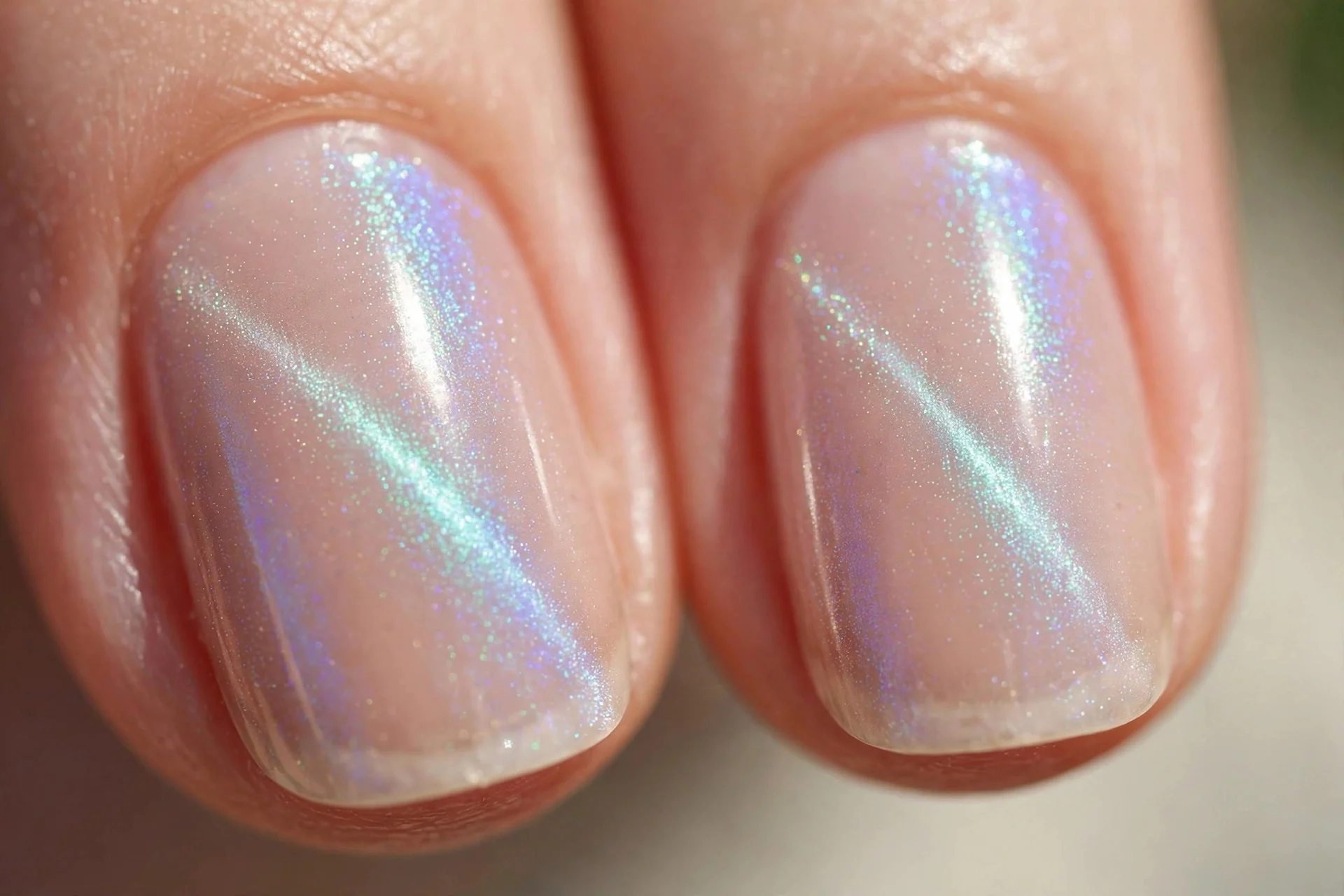
13. Starburst Points
Touch the corner of a cube magnet to 5–6 points around the nail (2 seconds each, no dragging), then cure. Each touch-point becomes a small star of concentrated pigment with aurora haze between them. It reads as a constellation — scattered, sparkling, slightly wild. Work fast; the pigment starts settling the moment you lift the magnet.
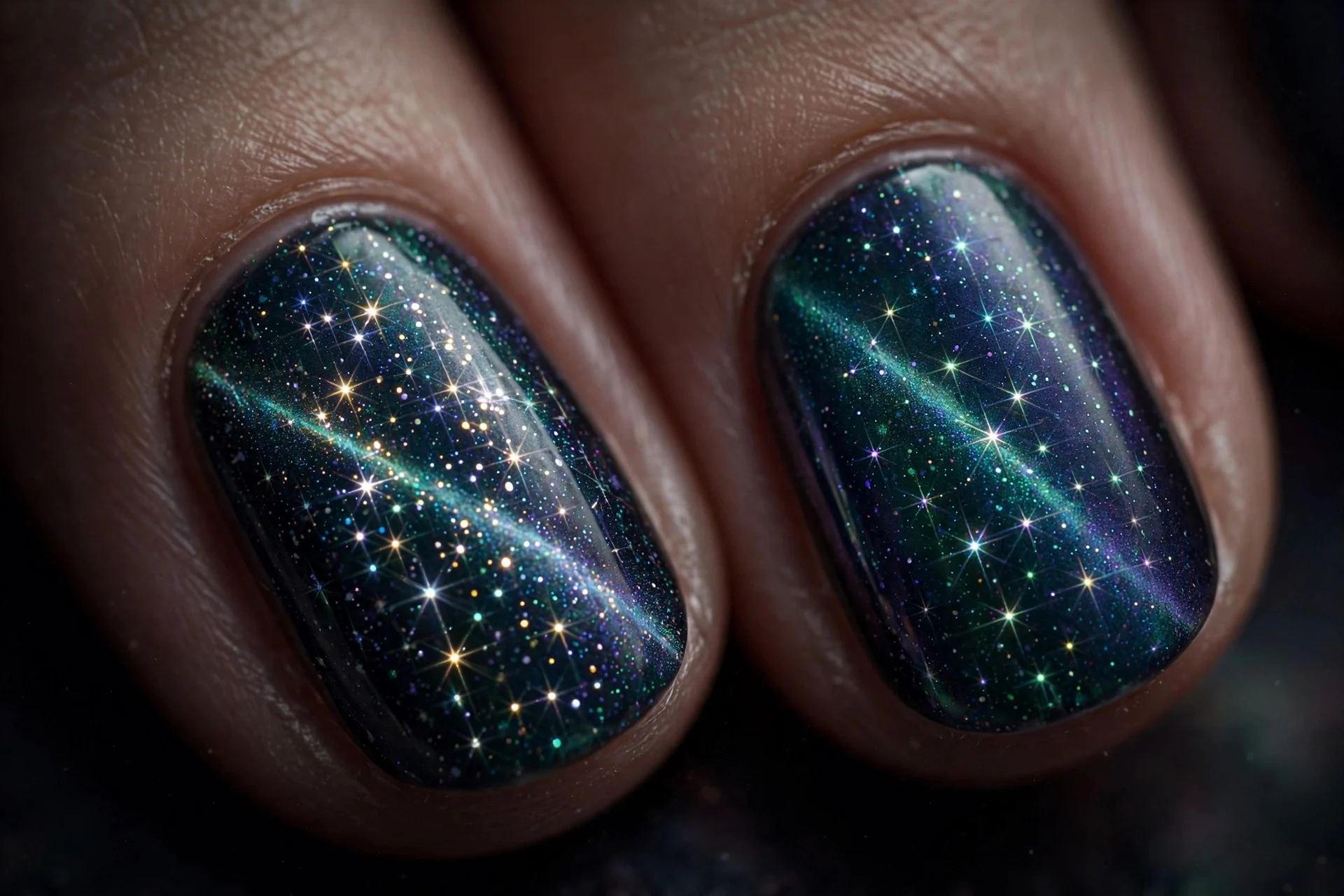
14. Side-Swept Aurora
Hold the bar magnet vertically along one sidewall, 3 mm off, for 10 seconds. The entire aurora sweeps to one side like hair in wind — asymmetric, editorial, striking. It elongates the nail visually because the eye follows the sweep. Pair with an asymmetric outfit (one-shoulder top, single earring) and the whole look rhymes.
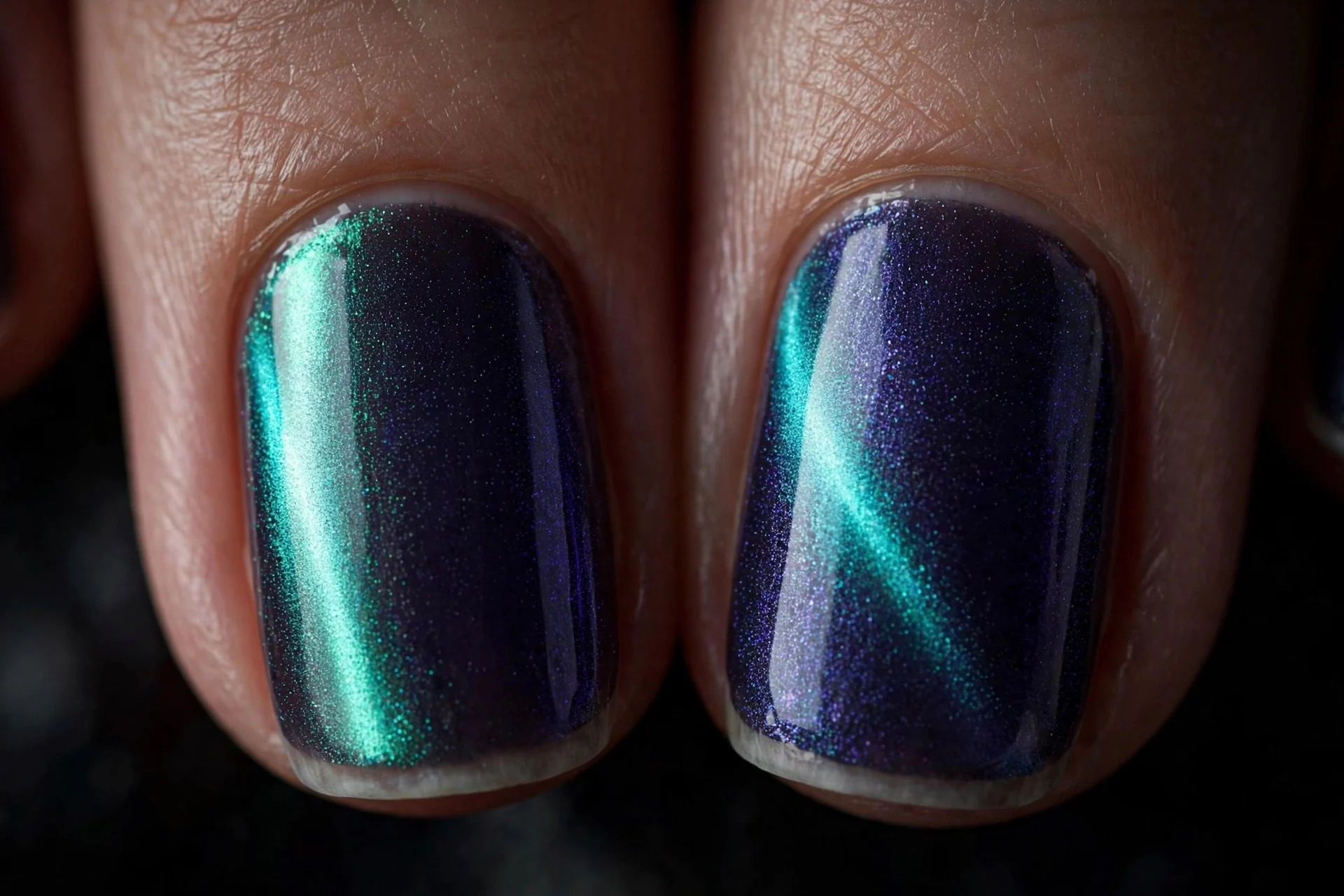
15. Full-Coverage Galaxy
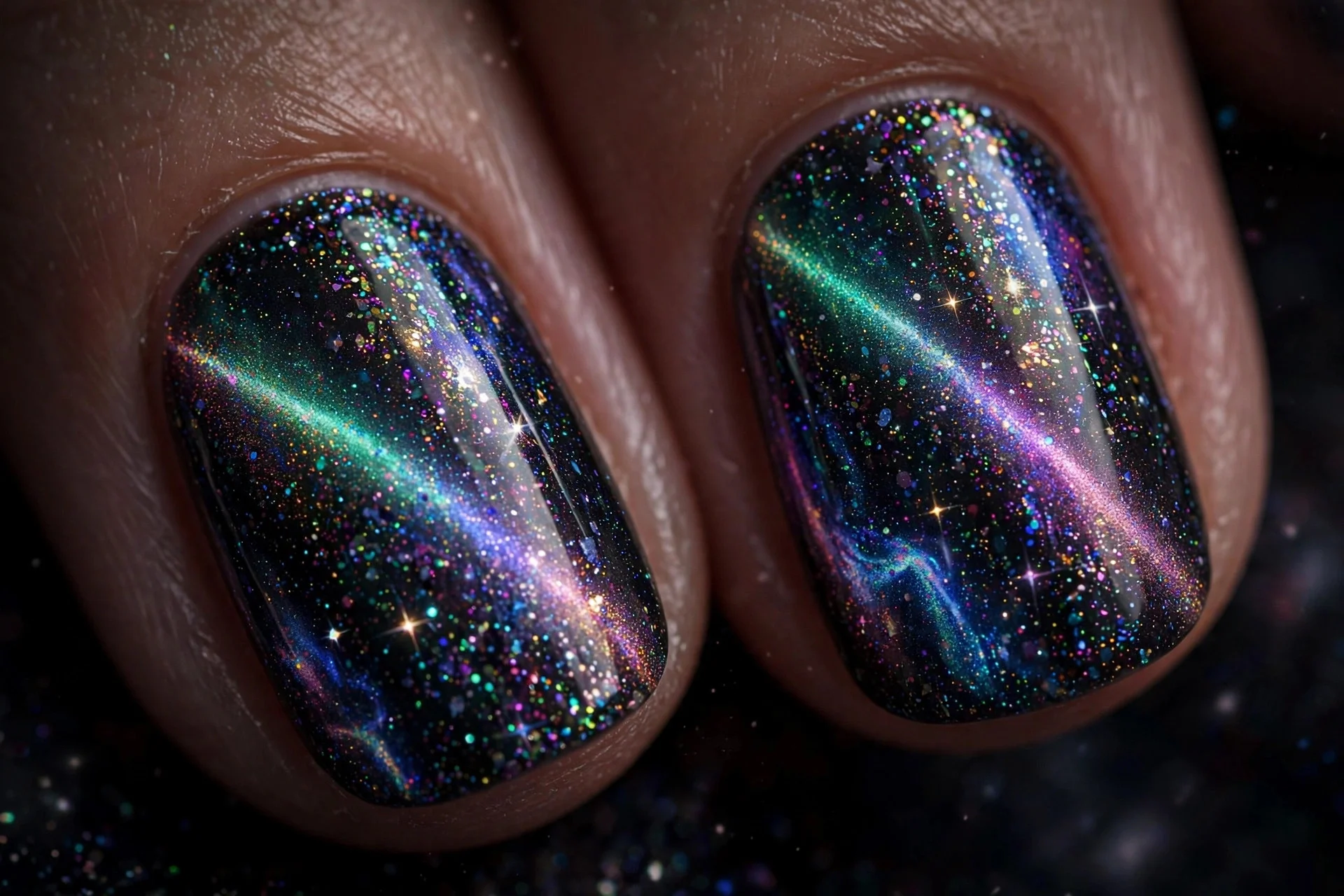
The maximalist finale: black base, two magnetic coats in different shifts (green-purple, then blue-pink), starburst touches, glass top coat. Every technique in this masterclass layered into one manicure. It's a lot of nail — save it for nights when subtlety isn't the assignment. Salon: $95–115; at home, budget an hour.
Frequently Asked Questions
What's the difference between cat eye and aurora nails?
Standard cat eye concentrates magnetic pigment into one sharp band. Aurora keeps the pigment partially dispersed for shifting, multi-zone glow. Same polishes, different magnet handling — distance, angle, and dwell time create the difference.
Which magnet do I need for aurora effects?
A standard rectangular bar magnet covers 12 of the 15 techniques here. Add a circular donut magnet (~$8) for halo rings. That's the complete kit — no specialty tools required.
Why does my aurora look muddy instead of glowing?
Usually the coats are too thick or the magnet was too close for too long, over-concentrating the pigment. Go thinner on product, hold the magnet 1–2 mm farther off, and cure between layers if you're stacking.
How long do aurora gel nails last?
Two to three weeks, same as any gel manicure. The magnetic effect is cured into the polish and doesn't fade — layered techniques actually wear better because there's more cured material.
Can I do aurora with regular polish?
Magnetic regular polishes exist, but the effect is weaker and shorter-lived — the pigment keeps moving as the polish dries. For true aurora depth, gel with a lamp is strongly recommended.
What base colors work best under aurora?
It depends on the mood. Black and deep plum bases make aurora ignite — maximum contrast, best for evenings. Sheer nude and pale grey bases make it whisper — subtle and office-friendly. Mid-tone bases (mauve, slate blue) give you the most color shift, because the aurora has enough contrast to play against without being swallowed. When testing a new magnetic shade, try it over both black and nude before committing to a full set.